


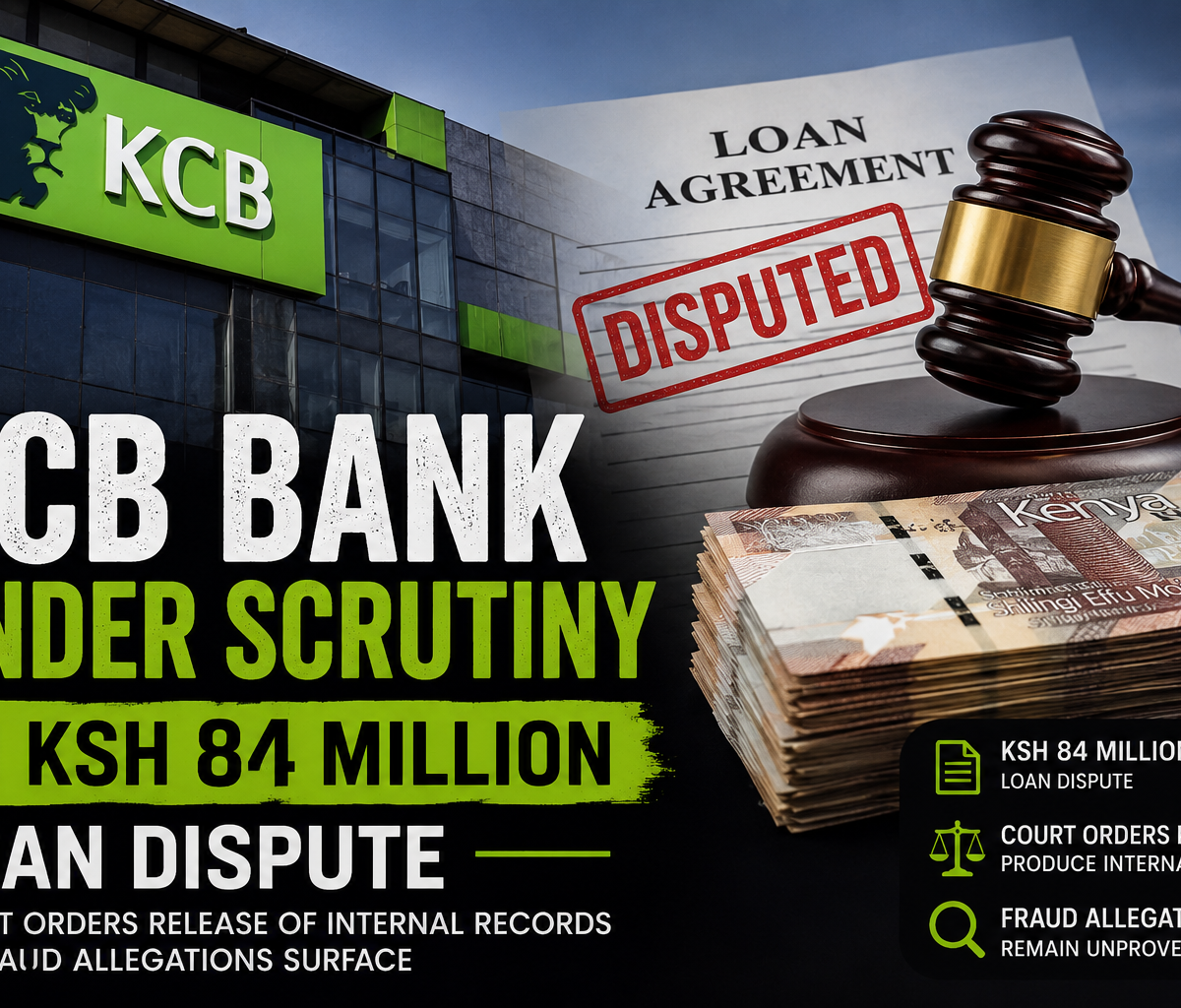
KCB Bank Kenya, one of East Africa’s largest financial institutions, has found itself at the center of a high-profile legal dispute involving an alleged KSh 84 million loan. The case has attracted significant public interest after claims emerged that the debt may have originated from unauthorized transactions rather than a legitimate borrowing arrangement.
The dispute has raised questions about banking procedures, internal controls, and customer protection within Kenya’s financial sector.
What Is the KCB KSh 84 Million Dispute About?
The legal battle involves Gillys Security & Investigations Limited and its directors, who have challenged KCB’s attempts to recover more than KSh 84 million from them.
According to court filings, the company claims it never legally borrowed the money in question. Instead, the plaintiffs allege that the debt arose from suspicious transactions and that they were later pressured into signing loan documentation intended to regularize the disputed amount.
The company has argued that the loan agreement should not be enforced because the circumstances surrounding its creation remain questionable.
Court Orders KCB to Produce Internal Documents
In a significant development, the High Court directed KCB Bank to provide internal records related to the disputed transactions.
The court noted concerns regarding the bank’s inability to adequately explain why certain requested documents were unavailable. As a result, the judge ordered greater disclosure to allow all parties to examine the evidence surrounding the alleged debt.
Legal analysts view the ruling as an important step toward ensuring transparency and accountability in complex banking disputes.
Fraud Allegations Remain Unproven
While allegations of fraud have featured prominently in the case, it is important to note that no court has concluded that KCB Bank engaged in fraudulent conduct.
The allegations remain claims made by the parties involved in the lawsuit, and the matter continues before the courts. KCB has maintained its position regarding the debt and continues to defend its actions through the legal process.
The final outcome of the case will depend on evidence presented during the proceedings and any subsequent judicial determinations.
Why the Case Matters
The KCB loan dispute highlights several important issues affecting Kenya’s banking sector:
1. Customer Protection
The case emphasizes the need for robust safeguards to prevent unauthorized transactions and ensure customers are protected from potential financial losses.
2. Banking Transparency
Financial institutions are expected to maintain detailed records of transactions and lending activities. Courts increasingly require banks to produce these records when disputes arise.
3. Internal Controls
The matter underscores the importance of strong internal controls and compliance systems designed to detect irregular transactions before they escalate into major legal disputes.
4. Public Confidence in Banks
As one of Kenya’s leading banks, KCB plays a critical role in the country’s financial system. High-profile court cases can influence public perceptions of banking governance and accountability.
KCB Bank’s Position
KCB Bank has continued to operate normally throughout the proceedings and remains one of the most profitable and well-capitalized financial institutions in East Africa.
The bank has not been found liable for fraud in relation to the ongoing dispute. The case remains subject to judicial review, and any conclusions regarding wrongdoing will depend on the court’s final determination.
What Happens Next?
The next phase of the case is expected to focus on examining the internal records ordered by the court. These documents may help clarify how the disputed transactions occurred and whether the debt was properly created.
Legal experts say the outcome could set an important precedent for future disputes involving banking records, loan agreements, and alleged unauthorized transactions in Kenya.
Conclusion
The KCB Bank KSh 84 million dispute has become one of the most closely watched banking cases in Kenya. While serious allegations have been raised, the matter remains unresolved, and no final court finding has established fraud on the part of KCB.
As the legal proceedings continue, the case is likely to remain a significant reference point in discussions about banking accountability, transparency, and customer protection within Kenya’s financial sector.