


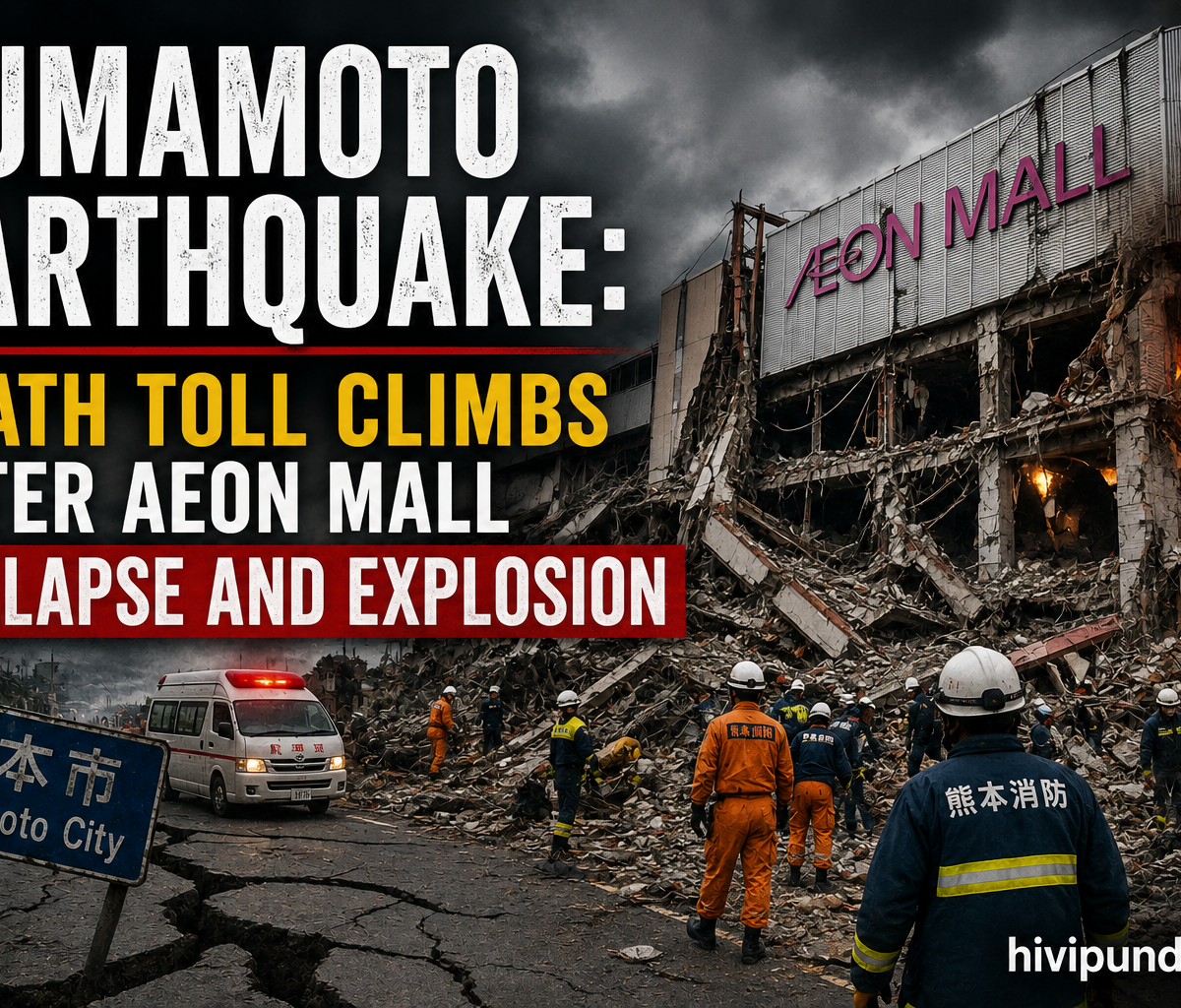
Rescue teams in southwestern Japan are still combing through rubble days after a powerful earthquake struck Kumamoto Prefecture triggering a deadly explosion that partially collapsed the Aeon Mall shopping complex in the city of Kashima. The disaster has become one of the deadliest in the region in years, with casualty figures climbing daily as crews reach previously inaccessible areas.
What Happened
The quake — registering at magnitude 6.8 to 7.1 depending on the measuring agency — struck at 4:27 p.m. local time, during the mall’s peak summer vacation period, when an estimated 3,000 people were inside the complex. All customers were evacuated to the parking lot within roughly 30 minutes, according to Aeon Malls president Akio Yoshida.
Shortly afterward, an explosion tore through part of the building, causing a significant section to collapse. Rescue workers later reported the smell of gas inside the structure, and Japan’s chief cabinet secretary confirmed authorities are investigating the exact cause.
The Human Toll
At least 18 people have died across the affected area, with the toll expected to rise as search operations continue. Casualties include mall employees killed in the explosion, with additional deaths reported at the Nippon Paper Industries factory in Yatsushiro, where a chimney collapsed. More than 60 people have been injured, several critically, and multiple workers remain unaccounted for.
Beyond the mall itself, nearly 35,000 homes lost electricity and roughly 15,000 lost running water. More than 8,800 residents have taken shelter in over 400 evacuation centers, many now being outfitted with air conditioning as rescuers and displaced residents contend with sweltering summer heat.
Rescue Operations Continue Around the Clock
Soldiers, firefighters, and police are working through the damaged mall and collapsed residential structures, using search dogs and heavy equipment to look for anyone still trapped. The gas smell reported at the site has complicated the recovery effort, forcing crews to work with additional caution around the unstable structure.
Why This Earthquake Is Different
Kumamoto has a painful history with seismic disasters, having suffered a deadly double earthquake sequence in 2016. This latest quake has reignited concerns about the seismic resilience of large commercial buildings across Japan and is likely to trigger a fresh round of scrutiny over mall and retail-complex safety codes in earthquake-prone regions.
What to Watch Next
Expect updates on the final death toll, the official cause of the mall explosion, and whether Japanese regulators move to review building codes for large shopping complexes following the disaster.